
Why the Brand Behind Our Machines Matters
What 50+ years of telehandler innovation looks like — and how a family workshop in Italy became the world leader in rotating telehandlers.
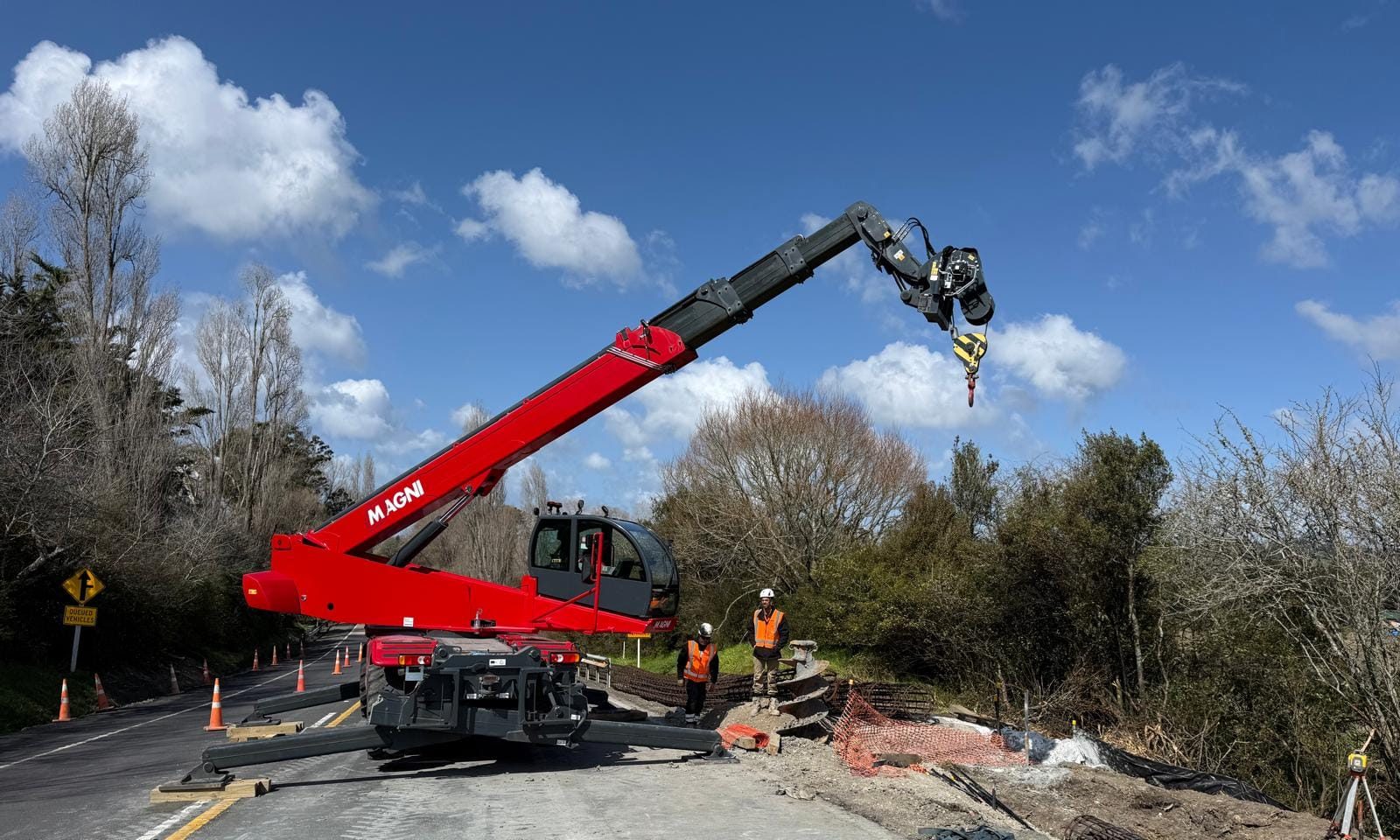
If you’ve seen a MAGNI rotating telehandler on a job site, you already know these machines are built different.
But most people in New Zealand don’t know the story behind them. It’s worth knowing. Because when you’re investing in a piece of kit that replaces cranes, works as an aerial platform, and handles heavy lifts — you want to know who designed it and why.
It Started With a Family Workshop in Italy
The Magni story goes back to 1972. Pietro Magni — a tractor mechanic, cart builder, and tower crane manufacturer — founded a company called Fargh SpA with his children Riccardo, Giorgio, and Franca.
They started with hydraulic cranes. But the family had bigger ideas.
By the 1980s, Fargh had built the first telescopic handler in Europe — the Fargh 4000 FS. It featured patented boom technology that was ahead of its time.
That machine laid the groundwork for everything MAGNI builds today.
Sports Car Country
Here’s something most people don’t realise.
MAGNI is based in Modena, Italy — the same city that gave us Ferrari, Maserati, Lamborghini, and Pagani.
That heritage shows up in the machines. The cab interiors are designed with the same attention to detail you’d expect from an Italian sports car. It’s not just about looks, either. MAGNI studied ergonomics closely to make sure operators stay comfortable across 8–10 hour shifts.
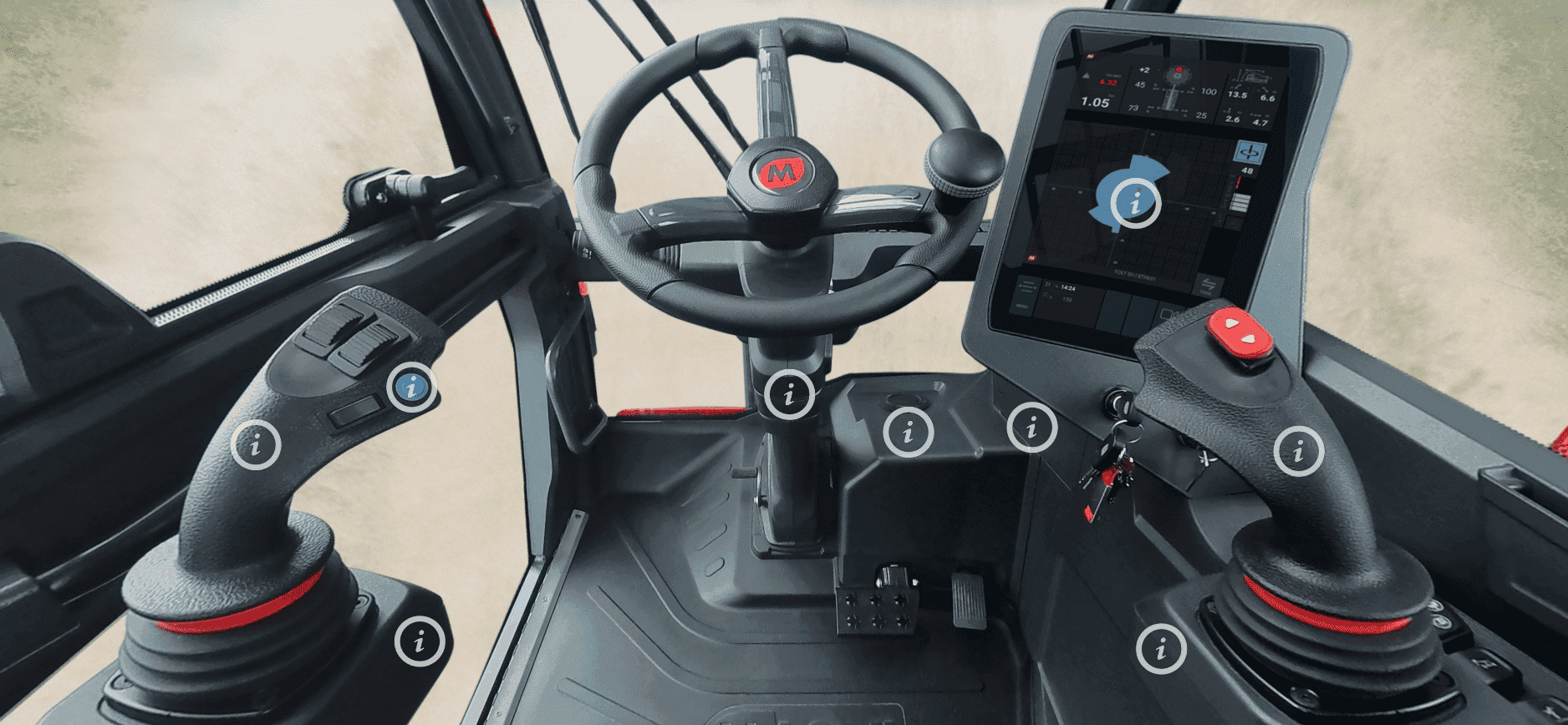
One example: MAGNI developed a patented tilting seat that moves the operator forward and back electrically. It keeps the neck at a consistent angle no matter where the boom is positioned.
That’s the kind of detail that comes from decades of thinking about how people actually use these machines.
27 Years With Manitou — Then a Fresh Start
In 1982, the Magni family entered a partnership with Manitou Group. That collaboration lasted 27 years and helped drive significant growth in the telehandler market.
Then in 2013, Riccardo Magni and four of his children founded MAGNI Telescopic Handlers as an independent company. Within two years, they launched 21 models across three product lines:
RTH
Rotating Telehandlers
Full 360-degree rotation with reach up to 51m+. The flagship range.
HTH
Heavy Lift Telehandlers
Built for serious tonnage. Designed for the toughest industrial and construction applications.
TH
Fixed Boom Telehandlers
Traditional telehandler capability with MAGNI engineering and build quality.
Each designed for specific industry needs. All built on the same core philosophy.
The Three-in-One Philosophy

This is what sets MAGNI apart from everything else on the market.
Every MAGNI rotating telehandler is designed to work three ways:
As a telescopic handler, an off-road crane, and an aerial work platform — all in one machine.
That means fewer machines on site. Fewer mobilisation costs. Less downtime swapping between equipment.
For construction and industrial operations in New Zealand, that’s a massive efficiency gain.
Record-Breaking Performance
MAGNI doesn’t just build versatile machines. They build powerful ones.
2019 — RTH 13.26
13,000 kg
Set a new industry benchmark for load capacity.
2021 Milestone
5,000th
Telehandler produced — just 8 years after founding.
63
Markets Worldwide
600+
Employees
$571M
USD Revenue (2023)
That kind of growth doesn’t happen by accident.
Safety That’s Built In — Not Bolted On
One of the big reasons MAGNI is gaining traction globally is safety.
🛡️ Load Moment Indicator (LMI)
Physically prevents operators from overloading or tipping the machine. You can’t override it. It’s not optional.
📡 RFID Attachment Recognition
Automatically recognises which attachment is fitted and sets the correct load chart and safety parameters. No manual programming. No room for human error.
🏗️ ROPS/FOPS Level 2 Certified
Certified cabs with improved visibility from a forward-shifted cab position for maximum operator protection.
🔑 Patented Easy-Access System
MAGNI’s proprietary access system designed around keeping people safe getting in and out of the machine.
What This Means for New Zealand
As MAGNI’s exclusive New Zealand distributor, we see first-hand how this heritage translates to real performance on Kiwi job sites.
The MAGNI rotating telehandler category is still relatively new here. Most construction professionals have never seen one work. But once they do, the conversation changes fast.
A single MAGNI RTH can do the job of a crane, an EWP, and a traditional telehandler. That’s not marketing — it’s how these machines are engineered from the ground up by a family that’s been building telehandlers longer than almost anyone else in the world.
If you want to see what 50 years of Italian engineering looks like on a New Zealand construction site, get in touch. We’ll set up a demo and let the machine do the talking.